This post may contain affiliate links. If you book or purchase through them, we may earn a small commission at no extra cost to you. [Full disclosure policy]
Five Islands, Five Completely Different Food and Rum Cultures
Everybody assumes a Caribbean port day is the same beach, the same jerk chicken stand, the same rum punch in a plastic cup with an umbrella stuck in it. Five islands into this itinerary, I can tell you that is not even close to true.
Barbados does not taste like Dominica. Dominica does not taste like St. Lucia. And by the time you get to St. Maarten, you are not even on one food culture anymore — you are standing on two.
I have been eating my way through these ports for years, and what gets me every time is how much history sits on one plate. A bowl of cou-cou in Barbados is telling you something about where rum actually started. A plate of green fig and saltfish in St. Lucia is telling you something about who was cooking on that island long before the resorts showed up. This is not a “best restaurants” roundup. This is what is real on each island, and what we would actually walk you toward ourselves.
This is the run of ports on our Sail With Us sailing aboard Valiant Lady, and we built this guide so you step off that ship already knowing what you are tasting — not guessing at a laminated menu built for a tour bus.
Quick answer:
Barbados is rum's actual birthplace — Mount Gay has been distilling there since 1703. Dominica cooks from the ground up, farm-fresh and ital-leaning. St. Lucia's Friday Night Fish Fry in Anse La Raye is the best seafood you will eat all week. Tortola is your jumping-off point for the real Painkiller, invented at the Soggy Dollar Bar on Jost Van Dyke. And St. Maarten splits into two completely different food identities depending which side of the island you are standing on.
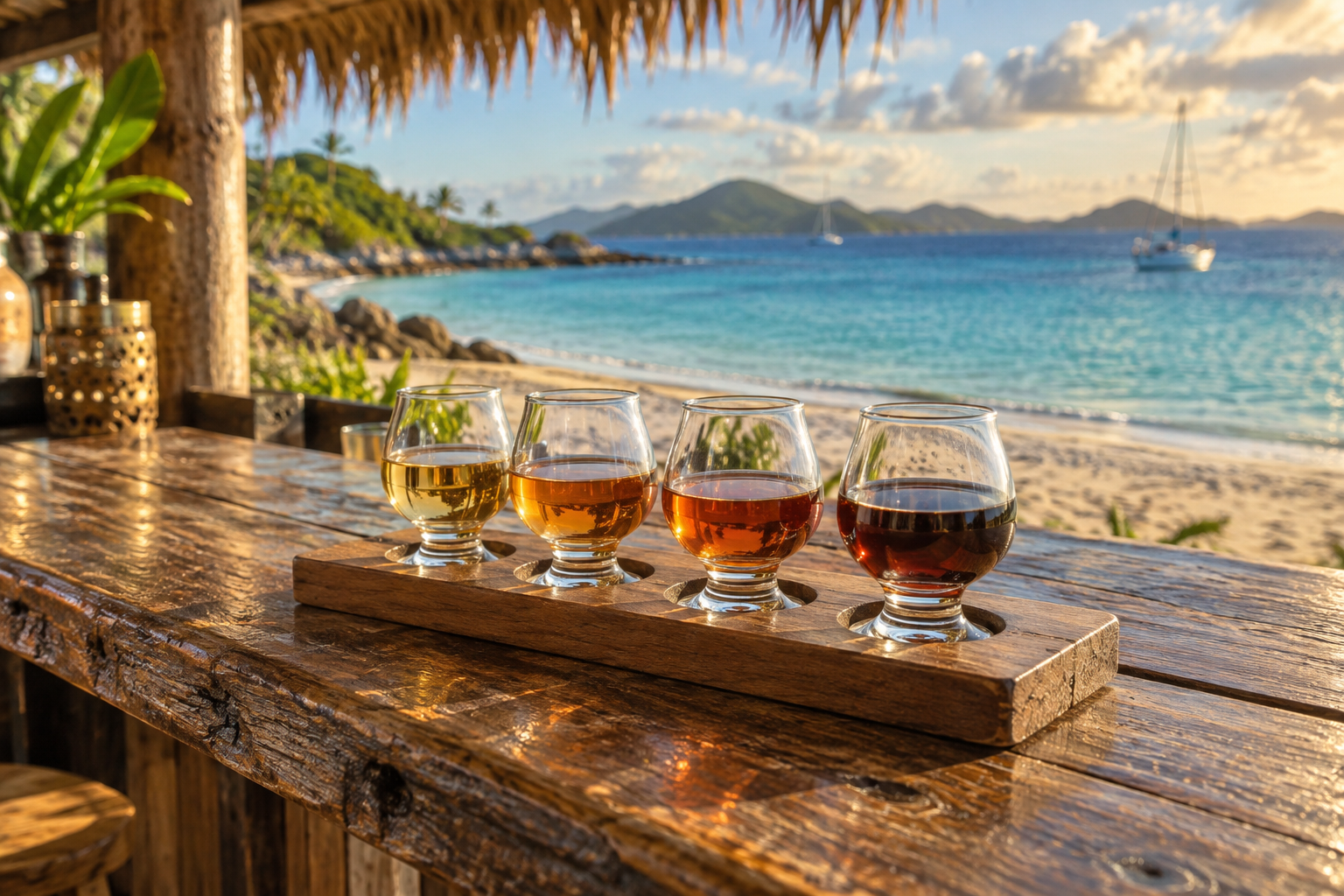
Barbados — Where Rum Was Actually Born
Everybody has poured a rum punch at some point. Almost nobody knows they are drinking from an island that has been making rum since before the United States existed. Mount Gay has been distilling in Barbados since 1703 — that is not marketing copy, that is the oldest continuously operating rum brand on record, still working out of St. Lucy parish on the island's north coast.
The national dish is cou-cou and flying fish — cornmeal and okra worked into a smooth, almost polenta-like base, served alongside flying fish that is steamed in a Creole gravy of tomato, onion, and lime rather than fried. It shows up on tablecloths and on paper plates, and it tastes like it belongs to the island, not to a hotel buffet.
Addy's note: Skip the resort rum tasting and find an actual rum shop instead — the small, brightly painted roadside spots where dominoes get slapped on the table and the rum comes with a story attached. That is where Bajans actually drink, and it is a completely different education than a tour-bus tasting.
Dominica — The Nature Isle Cooks From the Ground Up
Dominica never went all-in on mega-resorts, and the food culture shows it. This is the most mountainous, rainforest-heavy island in the Eastern Caribbean, and instead of hotel buffets, you get small farms, roadside stands, and markets selling what actually grew nearby that week.
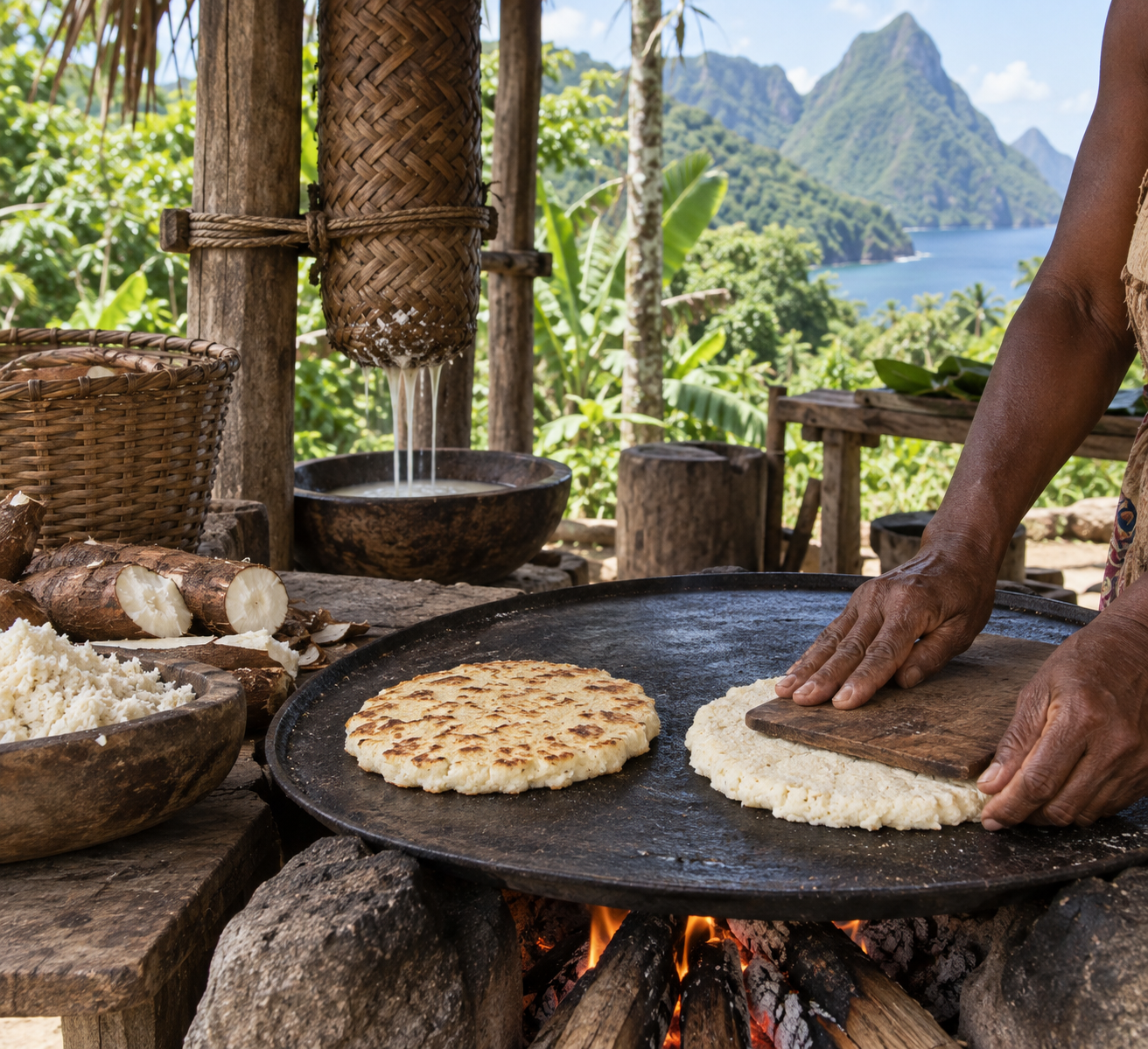
Expect cassava bread pressed and baked the traditional Kalinago way, breadfruit roasted or fried until it eats like a cross between potato and bread, callaloo built on dasheen leaves, and provision — yam, tania, plantain — stewed low and slow. There is also a real Rastafarian ital cooking tradition here: no meat, no heavy salt, everything built from what came out of the ground that morning.
Terry's read on it: this is the port where the food humbles you a little. Nothing is plated for a photo. It is just genuinely good, and it makes you ask more questions about where your food comes from at home.
St. Lucia — Creole Seafood and the Friday Night Fish Fry
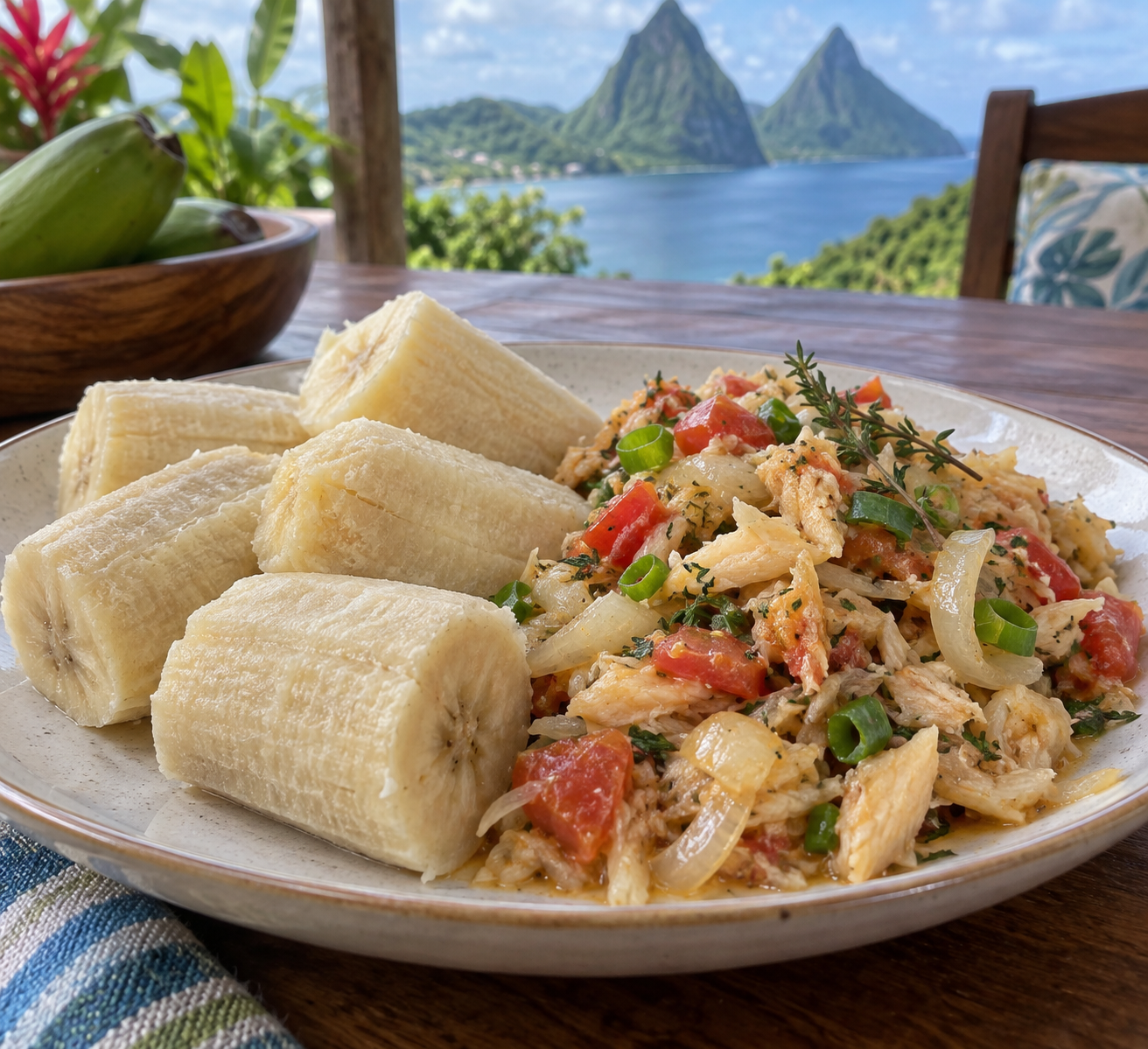
St. Lucia's national dish is green fig and saltfish — green (unripe) bananas boiled and seasoned, paired with salted cod cooked down with onion, tomato, and herbs. It is Creole cooking in one bowl: African technique, French influence, and whatever the island itself was already growing, all in the same pot.
If your port day lines up with a Friday, Anse La Raye is the move. This small fishing village turns its main street into a block party every Friday night — grills lining both sides of the road, fish pulled off boats that same morning, and bouyon, a hearty one-pot soup thick with provisions and whatever the catch was, simmering in pots big enough to feed the whole village. Wash it down with a cold Piton beer or a pour from St. Lucia Distillers, whose Chairman's Reserve and Bounty rums are a completely different flavor profile than anything you tasted in Barbados.
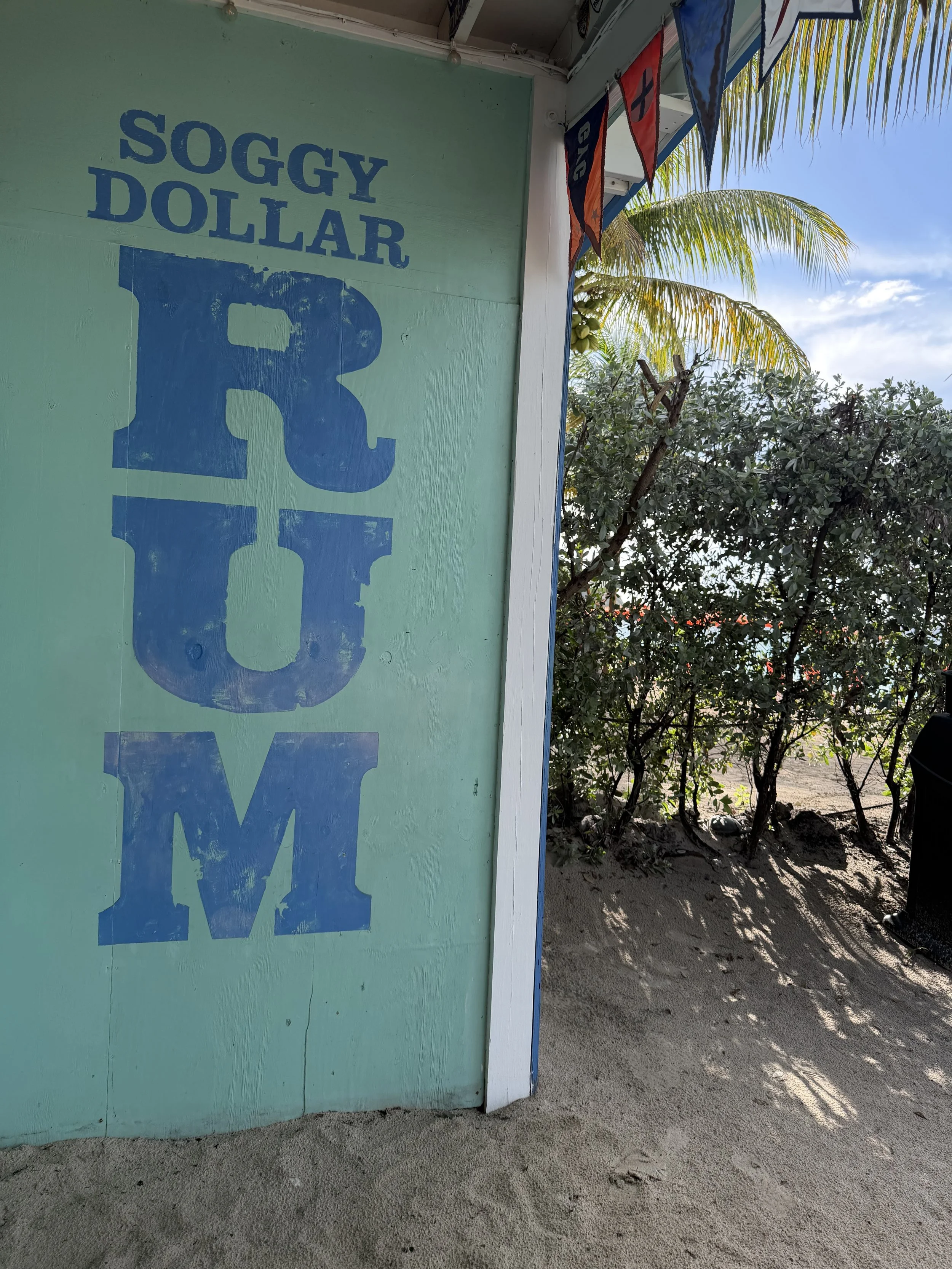
Tortola and Jost Van Dyke — Beach Bar Culture and the Real Painkiller
Tortola is where the ship actually docks, and Road Town has its own real food scene worth a stop on its own. But the beach bar culture the British Virgin Islands are famous for — and the drink that made them famous — sits a short ferry hop away, on Jost Van Dyke.
The Painkiller was invented in the 1970s at the Soggy Dollar Bar on White Bay, Jost Van Dyke: dark rum, cream of coconut, pineapple juice, and orange juice, finished with fresh nutmeg grated right over the top. The rum in question was Pusser's, the same navy-issue rum the British Royal Navy handed out to sailors right up until 1970 — which is exactly why it ended up in a beach bar glass a few years later.
Terry's rule: “If they hand you a Painkiller without grating fresh nutmeg on top, they made you a coconut piña colada with a new name. The nutmeg is not garnish, it is half the drink.”
St. Maarten — One Island, Two Completely Different Plates
St. Maarten is one landmass split between two countries, French St. Martin and Dutch Sint Maarten, and the food changes the moment you cross that unmarked border.
On the French side, Grand Case is the move — a strip of “lolos,” open-air roadside grills, turning out fresh grilled lobster, ribs, and conch alongside actual French bakeries and bistros that would not feel out of place outside Paris. On the Dutch side, Philipsburg does its own thing entirely: heartier Caribbean-Dutch home cooking, and guavaberry liqueur, a spirit specific to this island, made from the small wild guavaberry fruit rather than the tropical guava most people picture. Local names like Tuty's and Johnson's have made it a heritage product here, especially around the holidays.
What's Already on Your Plate Before You Even Step Off the Ship
The port food and the ship food talk to each other on this itinerary, and Virgin Voyages sets that up on purpose. There is no single main dining room on Valiant Lady — every restaurant is included, so instead of one “ship food” identity, you are moving between concepts like Extra Virgin, Pink Agave, and Gunbae the same way you will move between five completely different island food cultures on your port days.

From a chef's chair, that is the harder trick to pull off — running that many distinct kitchens well, every night, for the whole sailing — and it is part of why we keep sailing this itinerary ourselves instead of just recommending it.
Frequently Asked Questions
Where did rum actually come from? Rum's documented origins trace to Barbados, where Mount Gay has been distilling since 1703 — the oldest continuously operating rum brand on record.
Where was the Painkiller cocktail invented? At the Soggy Dollar Bar on White Bay, Jost Van Dyke, in the British Virgin Islands, in the 1970s — not on Tortola itself, though Tortola is the usual jumping-off point for the ferry over.
What is the national dish of St. Lucia? Green fig and saltfish — boiled green (unripe) bananas paired with salted cod cooked down with onion, tomato, and herbs.
Is St. Maarten one country or two? One island, two countries — French St. Martin and Dutch Sint Maarten — each with its own distinct food culture and cuisine.
Does Virgin Voyages have a main dining room? No. Valiant Lady has no single main dining room — every restaurant onboard is included, so guests move between multiple dining concepts like Extra Virgin, Pink Agave, and Gunbae instead of one assigned room.
So — Which Stop Are You Already Planning Your Meals Around?
That is the real question. Is it the Mount Gay tasting in Barbados? The Friday Night Fish Fry if your timing lines up? The Painkiller on Jost Van Dyke, made correctly, nutmeg and all? Or are you already deciding between a French bakery and a Dutch guavaberry pour on the exact same island?
Whichever stop has you sold, we would love to have you with us on this one. We built the Sippers community around exactly this kind of trip planning — real questions, real answers, no generic “island vibes” filler — and we talk through details like this on the Sunday Sip.
Ready to celebrate with us?
Questions? Email addy@addyandterry.com.