Port Day Planning: How to Make Every Hour Count
This post may contain affiliate links. If you book through one, we may earn a small commission at no extra cost to you — see our full disclosure policy.
The Four Minutes That Almost Cost Someone Their Cruise
Picture this: the ship docks at 7 a.m., and by 7:15 you're standing on the pier with four hundred other people, phone in hand, no plan, and a ship's horn that will not care about your indecision. It sounds dramatic. It isn't. We've watched it happen on more sailings than we can count, usually to someone who swore they'd “figure it out when we get there.”
Port days are half the reason a lot of us book the cruise in the first place — Cartagena, Nassau, Juneau, or Barcelona, wherever the itinerary takes us. But a port day only pays off if you've mapped the hours before your feet hit dry land. We've hosted enough groups and sent enough clients to know the difference between a guest who comes back onboard glowing and one who comes back cranky, sunburned, and $200 poorer than they meant to be. It's rarely luck. It's planning.
So let's talk about how we actually plan a port day — the version that gets you rum punch in hand by 11 a.m. and back onboard with time to shower before dinner, instead of sprinting up the gangway as the final boarding call sounds.
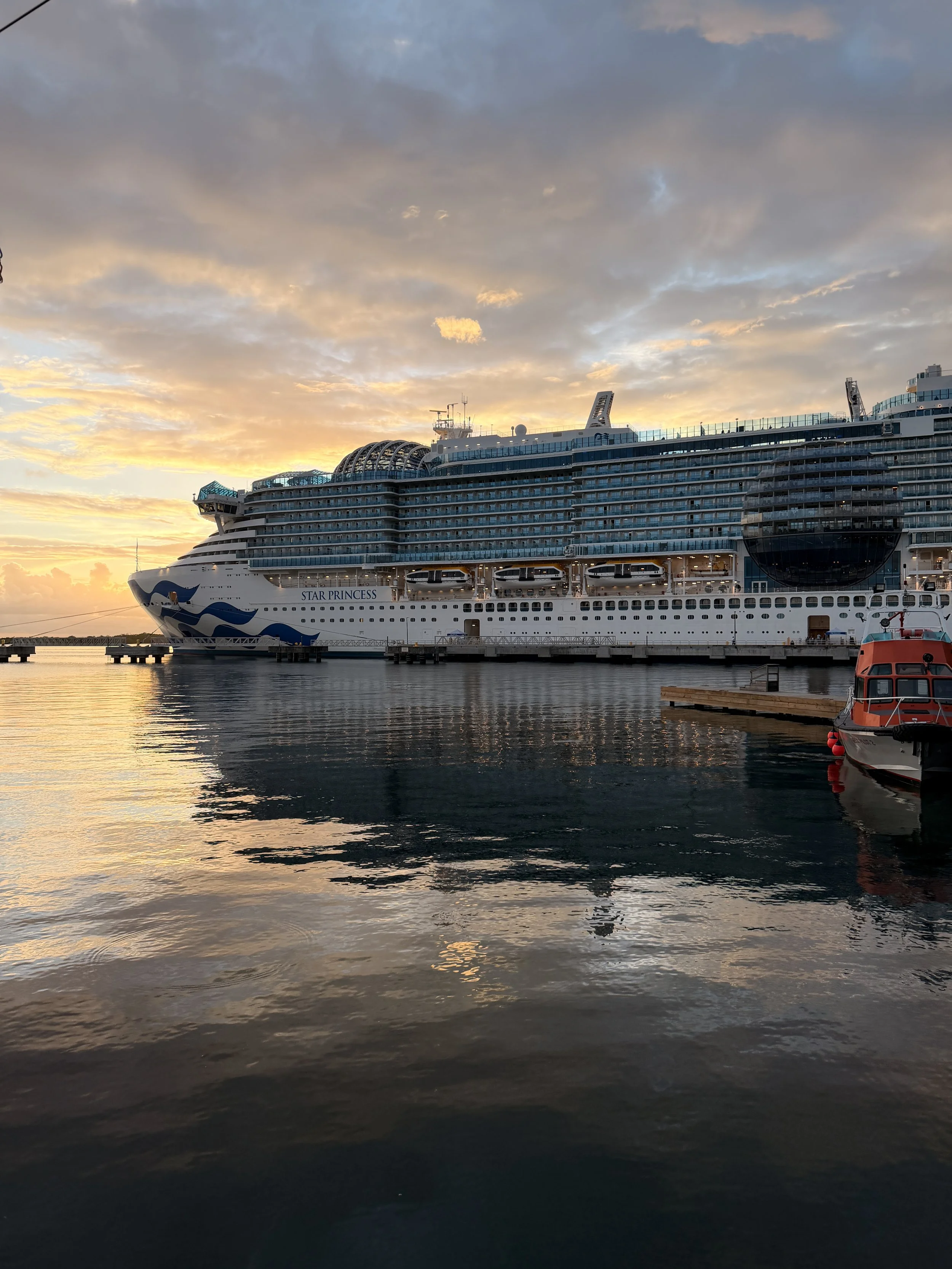
Know Your Clock Before You Know Your Plans
Before you book a single excursion, look at two numbers on your cruise app or daily planner: all-aboard time and the ship's clock versus local time. Those two numbers run your entire day.
All-aboard is usually 30 to 60 minutes before the ship actually departs, and it is not a suggestion — the ship leaves without you, and it will not feel sorry about it. We build every plan backward from that number, not forward from arrival. If all-aboard is 4:30 p.m., we're not booking anything that returns us to the pier after 3:30. That hour of padding is non-negotiable in our house.
Terry always adds the buffer wide instead of tight, and it's saved us more than once when a “quick” taxi ride back turned into a 45-minute crawl through port traffic. Also check whether the ship's clock matches local time — some ports run on a different time zone than the ship keeps, and that mismatch has stranded more travelers than bad weather ever has.
Ship Excursion, Private Tour, or DIY? How We Actually Decide
This is the question we get more than any other, and the honest answer is: it depends on the port, not on some blanket rule.
We book the ship's excursion when the port has limited infrastructure, when getting back late would mean missing the ship entirely, or when the activity is something like a submarine tour or a remote waterfall hike where the ship holds its own excursion. You pay a premium for that guarantee, and in the right port, it's worth every dollar.
We go with a vetted private tour or driver when we want a smaller group, more flexibility, and a local's perspective — usually at a lower price than the ship's version of the same stop. This is where a little research pays off; we look for operators with real reviews from actual cruisers, not five stars from three people.
We go full DIY — grab a cab or walk off the pier ourselves — when the port is walkable, well-marked, and forgiving of a wrong turn. Nassau, Cozumel, and Grand Turk are classic DIY ports for us. Somewhere more remote or less predictable, we build in more structure.
None of these is the “right” answer for every stop. The right answer is the one that gets you back onboard on time and doesn't leave you white-knuckling a taxi through unfamiliar streets.
The 80/20 Rule of Port Days
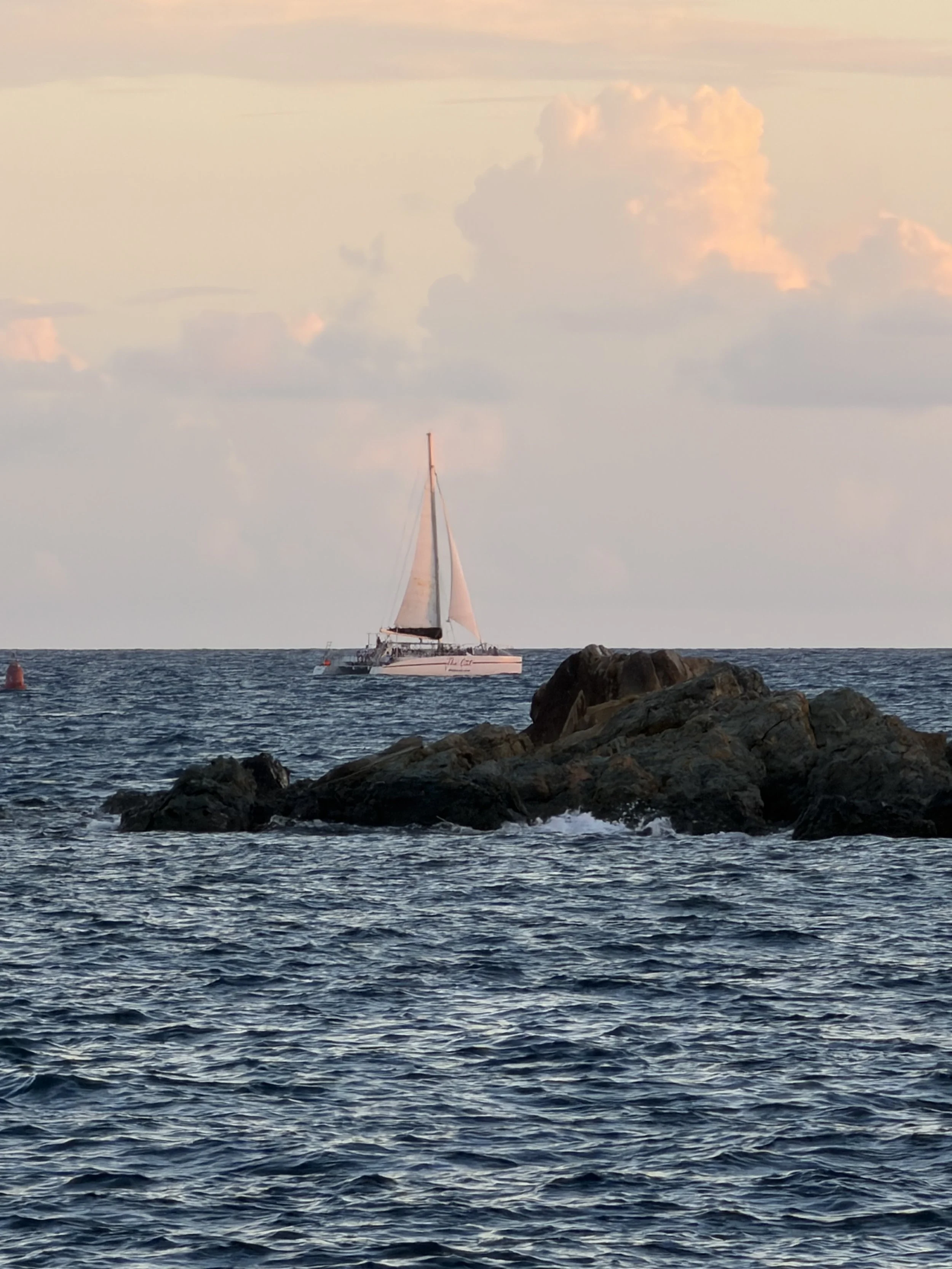
Here's a rule we live by: plan 80 percent of your day and leave 20 percent open. That 20 percent is where the best memories usually happen — the beach bar someone recommended in passing, an extra hour at the market, the spontaneous stop for conch fritters because the smell pulled you in.
Overpacking a port day schedule is one of the fastest ways to turn a vacation into a job. We've watched groups try to hit four stops in six hours and end up seeing all of them through a car window. Pick your must-do, pick a maybe, and let the rest breathe. Terry's rule of thumb: if the itinerary reads like a military operation, it's not a vacation anymore — it's a mission, and Terry does not do missions on vacation.
Money, Signal, and Getting Back Safely
A few things that sound small until you're standing in a foreign port without them.
Carry small bills in local currency if the port doesn't run on U.S. dollars, plus a backup card that doesn't charge foreign transaction fees. Cash still opens doors that cards don't, especially with independent vendors and drivers.
Screenshot your ship's return address, the terminal number, and a photo of your actual ship before you leave — in a port with multiple cruise ships docked, more than one of our guests has hopped in the wrong terminal's shuttle.
Turn on your phone's offline maps for the port city before you disembark. Data isn't guaranteed to work the second you're off the ship's WiFi, and a map that works without signal is worth more than any app you'll download that day.

Quick-Reference Port Day Checklist
1. Confirm all-aboard time first
Plan everything backward from it — not forward from when you arrive at the pier.
2. Choose ship excursion, private tour, or DIY based on the port
Not on habit. Let the destination's infrastructure and your group's comfort level decide.
3. Leave 20 percent of your day unplanned
The best moments are rarely the ones on the itinerary.
4. Carry cash, a backup card, and offline maps
None of these cost you anything to prepare, and all three have bailed us out at least once.
5. Screenshot your ship and terminal before you leave the pier
A thirty-second habit that has saved more than one Sipper from a very wrong shuttle.

The Part That Actually Matters
We didn't learn any of this from a travel blog. We learned it the way most of our best advice comes to us — by getting it wrong once, in a port far from home, and vowing never to let it happen to our guests. That's really what client experience and every group we host comes down to: we've already made the mistakes so you don't have to.
Port day planning isn't about controlling every minute. It's about protecting the minutes that matter — the ones where you're actually present, drink in hand, instead of watching the clock and wondering if you'll make it back.
Want the port-by-port breakdowns we don't post publicly — the exact tours we book, the ones we skip, and the all-aboard math for every stop on our upcoming sailings? That's what Sunday Sip is for. Join the Sippers community and get it in your inbox every week.
Addy & Terry Travel | AddyAndTerry.com | @addyandterrytravel | This post may contain affiliate links — full disclosure linked above.