How to Extend a Cruise Vacation Without Breaking the Budget
By Addy & Terry • Addy & Terry Travel • addyandterry.com • Money & Value
Quick Answer
The five most effective ways to extend a cruise vacation without spending significantly more are: arriving at the embarkation city one to two nights early, staying one to three nights in the disembarkation city after the cruise ends, booking back-to-back consecutive sailings on the same ship, choosing a longer itinerary (which typically costs less per night than a shorter one on the same ship), and selecting itineraries that include overnight port calls. Most of these strategies cost far less than planning a separate trip.
Here’s something we hear all the time from cruise travelers: the trip ended too soon.
Seven nights go fast. You finally hit your stride — you’ve figured out your favorite bar, claimed your deck chair, stopped checking your phone — and then it’s turnaround day. You’re back at port, your bag is packed, and you’re already wishing you had one more day.
Good news: you don’t have to just accept that. There are real, budget-smart ways to extend a cruise vacation — before you sail, after you disembark, and even in how you choose the trip itself. We’ve used most of these strategies ourselves and helped clients build longer, smarter trips at every price point.
Here’s exactly how to do it.

1. Arrive a Day or Two Early — and Do It Right
The most underused extension strategy is simply arriving at the embarkation city the day before your cruise — or two days before if the port city is worth it.
Most travelers fly in the morning of sailing day and spend the first hours of their cruise in transit panic. That’s not a vacation — that’s a relay race. Arriving the night before means you sleep in a real bed, get to the terminal relaxed, and actually enjoy boarding day instead of surviving it.

The budget move:
Book your hotel with points or a travel rewards card. A free pre-cruise night is one of the best uses of travel points out there.
Look for cruise line hotel packages — many lines partner with port-area hotels and include shuttle service. Carnival, Royal Caribbean, and Celebrity all run these programs, and the bundled rate is often cheaper than booking independently.
If your embarkation city is somewhere worth spending time — Miami, New Orleans, Barcelona, San Juan — add two nights, not one. The cost difference is minimal. The experience difference is significant.

2. Add a Post-Cruise Stay in the Disembarkation City
This is consistently the move we recommend to clients who want more trip without the price of rebooking a whole vacation.
If your cruise ends somewhere worth exploring — and many do — don’t immediately race to the airport. Stay one to three extra nights. You’ve already paid to get there. The incremental cost of a few hotel nights is a fraction of what a second trip to that city would cost.
A cruise that ends in Miami, LA, Nassau, Cozumel, Puerto Rico, or New York? Those are actual destinations. Two extra nights means you get the port day experience AND real local time. You eat where the locals eat. You find that rooftop bar the tourists don’t know about. That’s the trip.
The budget move:
Book flights home on a Tuesday or Wednesday instead of Sunday. Fare savings alone can cover a hotel night or two.
Check for cruise line disembarkation packages — same concept as the pre-cruise hotel deal, on the back end.
Use Airbnb for multi-night post-cruise stays. A two-night rental with a kitchen often runs cheaper than two hotel nights and gives you space to actually decompress.
3. Book a Back-to-Back Cruise
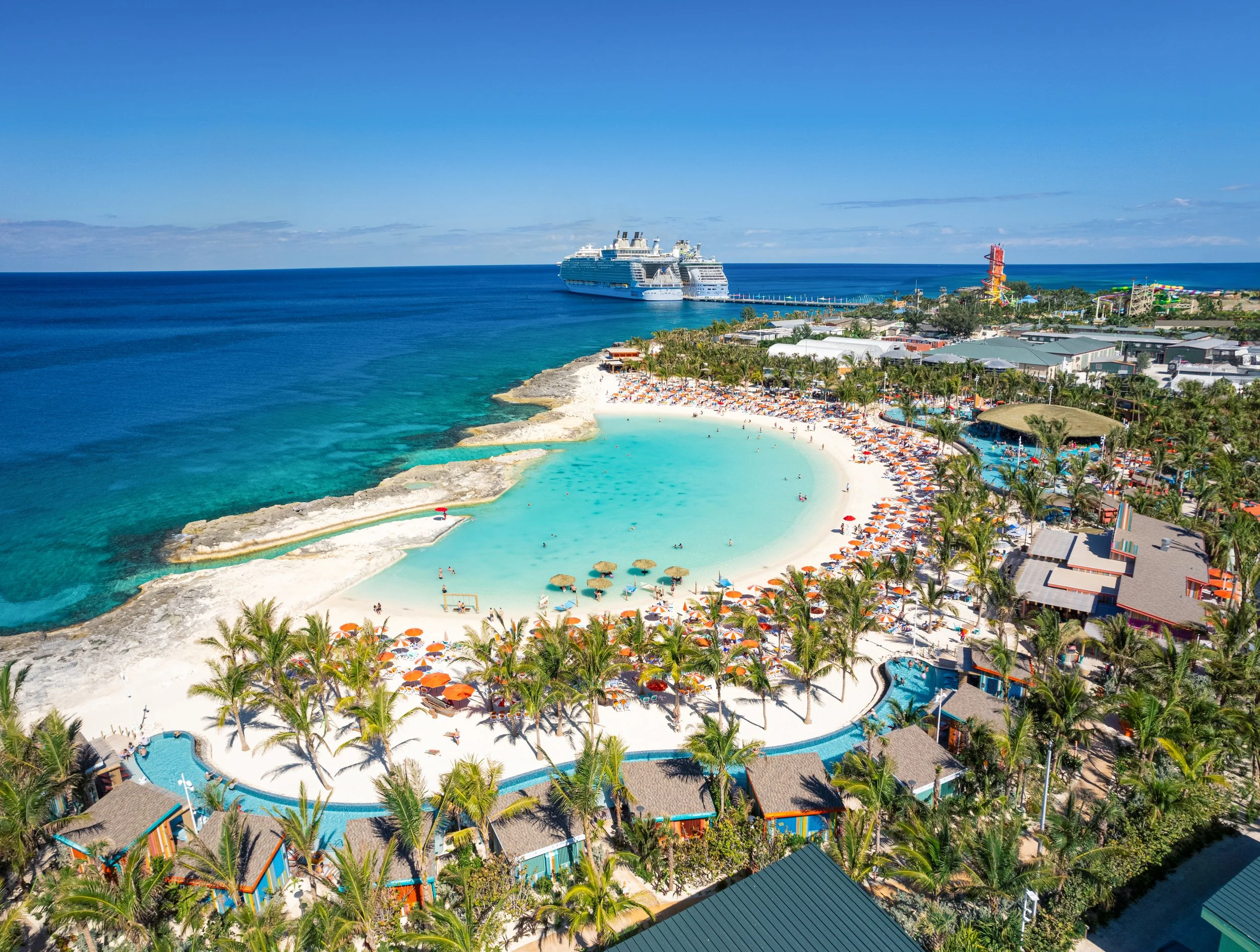
This is the extension strategy that cruise veterans live by. A back-to-back (B2B) means you book two consecutive sailings — same ship, different itinerary — and simply stay on board while other passengers disembark and re-board.
You don’t fly home. You don’t repack. On turnaround morning, continuing guests enjoy an almost-empty ship for a few peaceful hours while new passengers board. Then you sail again.
We cannot overstate how good this feels.
The budget move:
B2B rates are often discounted — cruise lines would rather keep you on board than sail with an empty cabin. Ask your travel advisor to search for consecutive sailing deals on the specific ship you want.
Your drink package, specialty dining, and any onboard credit from the first sailing usually carry over. Confirm with the cruise line, but most honor this.
Repositioning cruises are a B2B traveler’s best friend — longer itineraries at steep discounts because the ship needs to move between regions. If your schedule has any flexibility, these are the best deals in cruising.

4. Choose Longer Itineraries in the First Place
This sounds simple, but the math surprises most people. The per-night cost of a 10- or 14-night cruise is often lower than a 7-night sailing on the same ship. You pay more total — but you get significantly more trip per dollar.
A 7-night Caribbean on Royal Caribbean might run $1,400 per person. A 12-night on the same ship, similar time of year, might run $1,900. That’s $500 more for five additional nights — $100 per night — on a vacation that includes your room, most meals, entertainment, and transportation.
That is an exceptionally good deal for a vacation day.
The budget move:
Compare the per-night cost, not the total. A $500 fare difference that gets you 5 more nights is not expensive — it’s the smartest spend in travel.
Longer itineraries often include ports that 7-night cruises don’t reach — less saturated, more memorable, and usually more interesting from a cultural standpoint.
If PTO is the constraint, make longer sailings the priority for your biggest trip of the year. One great 12-night sailing beats two rushed 5-night sailings at the same annual budget.
5. Seek Out Itineraries With Overnight Port Calls
Some itineraries include overnight stays in a port city, or late-night departures that give you 10–12 hours ashore instead of the usual 6–8. These are worth seeking out deliberately.
An overnight call in a port like Dubrovnik, San Juan, Bermuda, or Buenos Aires is functionally like adding a bonus hotel night to your trip — without a hotel charge. You sleep on the ship, wake up in a beautiful city, and have the morning to yourself before most tourists arrive.
The budget move:
When comparing itineraries, look at both the number of ports and the hours in each port. A 7-night with two overnight stops can feel like a 9- or 10-night trip.
Bermuda itineraries from the East Coast are specifically known for this — 2–3 days docked in Hamilton with full ship amenities available. It’s a cruise and a land vacation in one booking.
Norwegian and Princess tend to offer more overnight-call itineraries than other mainstream lines. Ask your travel advisor to filter specifically for these when you’re comparing options.
The Real Point: You Have More Options Than You Think
Extending a cruise vacation isn’t about spending more money. It’s about spending what you’re already allocating more strategically.
Pre-cruise nights, post-cruise stays, back-to-back sailings, longer itineraries, itineraries with overnight port calls — any one of these moves the experience from a trip that ended too quickly to one that actually satisfies.
Most of these strategies cost less than people assume. And most of them are things your travel advisor can help you structure so the logistics actually work in your favor.
If you’re planning your next cruise and want more trip without proportionally more price tag — that’s exactly what we do. Reach out and let’s build it right.
Frequently Asked Questions
What is the cheapest way to extend a cruise vacation?
The cheapest way to extend a cruise vacation is to choose a longer itinerary in the first place. A 12-night sailing on the same ship frequently costs only $100–$150 more per person per night than a 7-night, making the extra days some of the best value in travel. If the trip is already booked, arriving at the embarkation city a night early using hotel points is the next most cost-effective move — potentially adding a day at no cash cost.
What is a back-to-back cruise?
A back-to-back cruise (B2B) means booking two consecutive sailings on the same ship. When the first cruise ends on turnaround day, continuing guests remain on board while new passengers embark, then sail again on the second itinerary. Cruise lines often discount B2B fares since keeping a cabin occupied is preferable to sailing with empty rooms. Most onboard packages — drink packages, specialty dining, and onboard credit — carry over to the second sailing, though guests should confirm this with the specific cruise line.
Is it cheaper per night to book a longer cruise?
Yes — longer cruises almost always cost less per night than shorter sailings on the same ship during a comparable time of year. As an example: a 7-night Caribbean sailing on Royal Caribbean might run $1,400 per person; a 12-night on the same ship in the same season might run $1,900. That’s five extra nights for $500 more — $100 per additional night — which is exceptional value for an all-inclusive vacation. The key is comparing per-night rate, not total cost.
Which cruise lines offer the most overnight port calls?
Norwegian Cruise Line and Princess Cruises offer more overnight port call itineraries than other mainstream lines. Bermuda sailings from the US East Coast are especially notable — many itineraries dock in Hamilton, Bermuda for two to three consecutive days. Mediterranean itineraries on Celebrity, Viking Ocean, and Royal Caribbean frequently include overnight calls in cities like Dubrovnik, Athens, and Barcelona. When comparing cruise options, look at both the number of ports and hours ashore, not just destination names.
How far in advance should I arrive before a cruise?
Most travel advisors and experienced cruisers recommend arriving at least one night before your sailing date — the night before, not the morning of. Flying in on embarkation day means any flight delay could cause you to miss the ship entirely, and there’s no coverage for that outside of travel insurance. Two nights is ideal if the embarkation city rewards exploration: Miami, New Orleans, Barcelona, San Juan, and Seattle are all port cities worth spending extra time in before you sail.
What should I do in the disembarkation city after my cruise?
Rather than rushing to the airport, stay one to three nights in the disembarkation city — especially if the ship drops you somewhere worth exploring. Cruises that end in Nassau, Cozumel, Puerto Rico, Bermuda, or New York put you in an actual destination you already paid to reach. Extra hotel nights there are almost always cheaper than equivalent nights at a resort, and they give you the relaxed local experience that port days never can. Use Airbnb for two-night-plus stays: a rental with a kitchen often runs cheaper than two hotel nights and gives you space to actually unwind.